





Nemasys Biological Leatherjacket Killer (Steinernema feltiae)


Free UK Mainland Delivery Over £99
Free UK Mainland Delivery Over £99

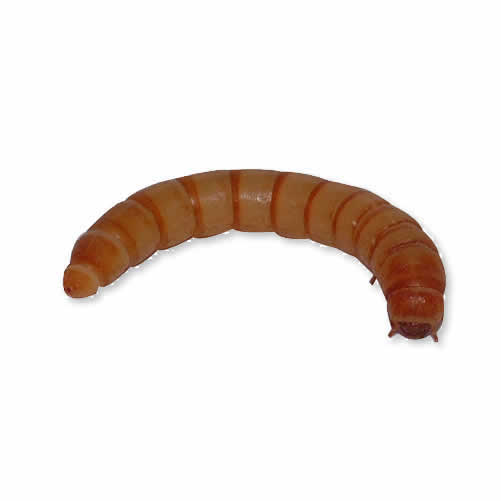
Leatherjackets (crane fly larvae) feed on grass roots, causing yellow patches, thinning turf, and loose grass that pulls up easily. Protect your lawn with safe, effective nematodes, nature’s solution. Simply add these microscopic worms to the lawn to tackle the issue at its source.
Not sure if it’s chafer grubs?
Leatherjackets = Grey/brown, worm-like, no legs.
Chafer grubs = White, C-shaped, orange head & 6 legs.
Click here for Chafer Grub nematodes
Nematodes naturally occur within soil in the UK, but in low numbers. By adding more of these leatherjacket-specific nematodes, you can quickly reduce leatherjacket populations. When they come into contact with a leatherjacket grub, they enter through natural openings and feed and multiply. Within days, the grub will stop eating, and within a week, it will die. The nematodes will multiply and spread out in the soil, seeking more grubs to continue to propagate. Most of this occurs below the surface.
Nemasys nematodes are supplied as a dry powder which can be mixed with water in a watering can and then applied to the area you want to protect. We advise applying them after spotting the first adult daddy long-legs (usually around August) and again after the spring thaw.
Nematodes are completely natural and prevalent in most gardens throughout the UK. Nemasys predatory nematodes are simply a more precise and effective version, which will only target the local leatherjacket population. They are designed for use where pets and other wildlife are present,
The best time to use these nematodes would be when the soil temperature is reliably above 10°C, and the leatherjacket eggs and grubs are likely to be present in the soil. Typically, this will be late August into October. A second round could be applied after the Spring thaw if you suspect there are still some grubs present in the soil. Don't worry too much if the temperature drops after the nematodes have been applied. While they do best when the soil is above 10°C they can survive the odd frost and will continue to work below the surface.
In total, you should go through 8 watering cans (40L of water) and cover a 40m2 area. For the larger 100m2 pack, simply start with 10L of water for the initial solution and apply with 20 watering cans to a 100m2 area.
Yes. Beneficial nematodes are safe around children, pets, birds, and other wildlife when used as directed. They target specific insect or slug species and do not affect mammals, birds, or plants.
Yes. Several nematode species are particularly well suited to greenhouse use, including those for fungus gnats, sciarid fly, thrips, and housefly. Apply to the growing medium and keep it moist after treatment.
Mix the pack with water according to the label, then apply with a watering can fitted with a coarse rose, a hose-end applicator, or a sprayer on a coarse setting. Water in afterwards and keep the soil moist for two weeks.
Yes. Nematodes are one of the most widely used biological control methods in UK gardening. They are living organisms that target specific pests naturally, without chemical residues, making them a strong fit for organic and wildlife-friendly growing.
For below-ground slug control, nematodes are generally the stronger option. They target slugs in the soil where most feeding and egg-laying happens, leave no chemical residue, and are safe for wildlife, children, and pets.Read our nematodes for slugs blog for a full breakdown, or see our guide to slug pellets if you want to compare approaches.
Garden Wildlife makes every effort to ensure that the goods you ordered get to you undamaged and in a timely fashion.
Please check the estimated delivery period for individual products on their respective website page and please feel free to contact us with any questions before ordering.
Delivery to Scotland and Off-shore locations may not be possible, could take longer, or could cost more. If there are any issues regarding the delivery address our team will email you as soon as possible.
We will always send you as much tracking information as possible regarding your order. Our team is also available to contact at sales@gardenwildlife.com should you need us.
Get Email Updates
Subscribe to get special offers, free giveaways, product news and updates from the GW team.
Auto-renews, skip or cancel anytime.
Auto-renews, skip or cancel anytime.

