







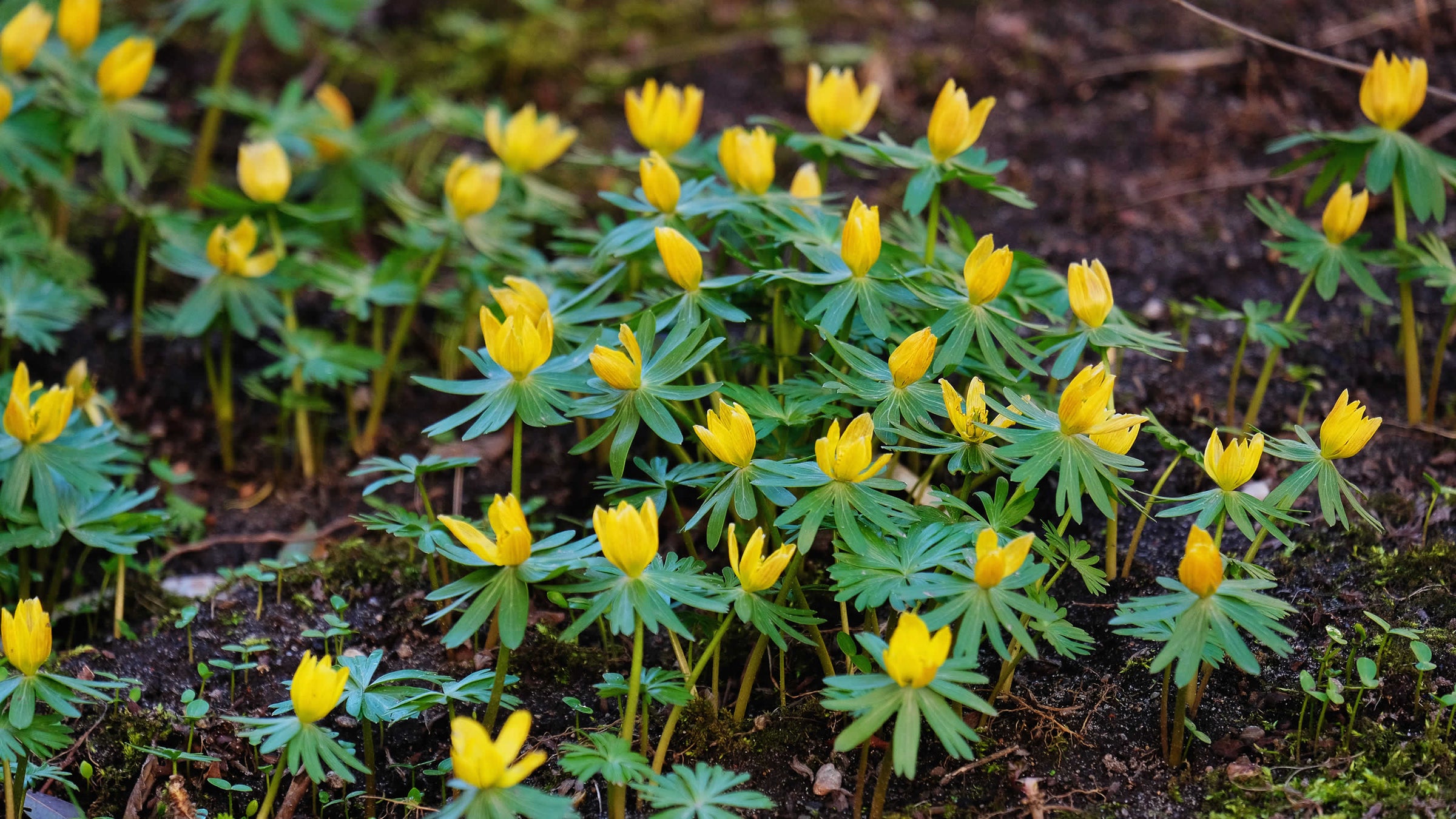
Eranthis (Winter Aconites)
Eranthis hyemalis, with its bright yellow cup-shaped flowers (January – March), is a critical early nectar source for emerging queen bumblebees (Bombus terrestris) and honeybees (Apis mellifera), providing sustenance when few other plants bloom. Its pollen-rich flowers also attract early hoverflies (Eristalis tenax). Planted in drifts under deciduous trees or in naturalized lawns, Eranthis thrives in moist, well-drained soil, complementing snowdrops (Galanthus nivalis) to create vital winter pollinator corridors. Though toxic if ingested, its ecological value lies in bridging the 'hungry gap' for insects awakening from hibernation.


Frequently Asked Questions
When is the best time for autumn planting of spring bulbs?
The ideal time to plant spring flowering bulbs like tulips, daffodils, crocus, and snowdrops is from September to November. Planting during this period allows bulbs to establish roots before winter and ensures a healthy, vibrant bloom in early spring, with stunning green foliage and flower colours ranging from purple and blue to bright yellows and whites.
How long do spring bulbs take to flower?
Most spring bulbs planted in autumn start to flower between February and May, depending on the type. Early bloomers like snowdrops and crocus appear first, while tulips and daffodils follow later in spring, creating a sequential display of colour.
Can I plant different types of spring bulbs together?
Yes! Mixing different bulbs such as tulips, daffodils, and muscari adds something extra in terms of colour and texture to your garden. Planting in clusters or drifts creates a natural, layered effect, letting you get a longer flowering season and a richer display for both you and pollinators.
Do I need to remove foliage after flowering?
Yes, but allow leaves to die back naturally rather than cutting them too early. Leaving the foliage lets the plant save energy, which the bulbs use to produce strong, vibrant flowers come next spring.