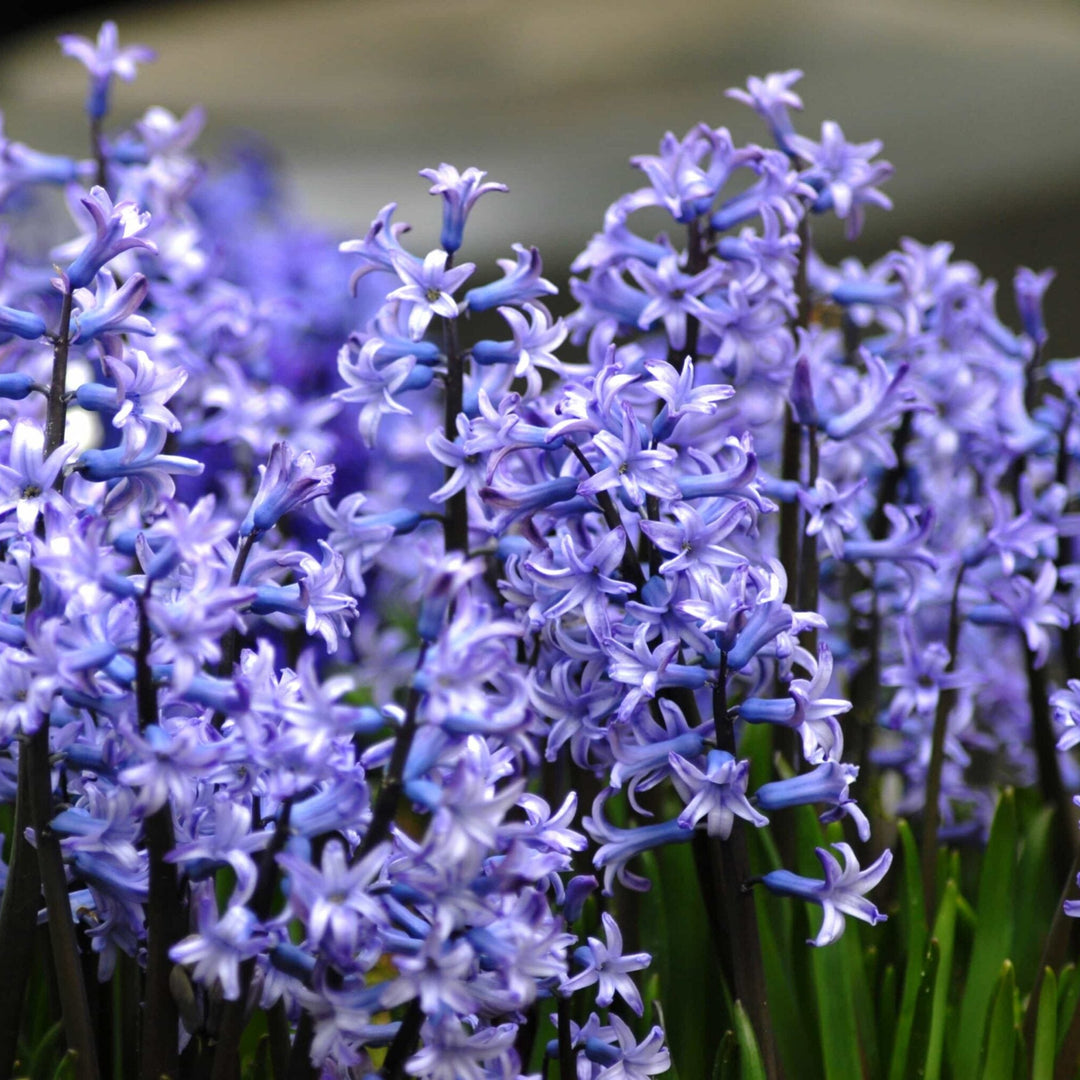
Hyacinthus orientalis 'Blue Pearl' (Multiflora) Bulbs
- In stock, ready to ship
Free UK Mainland Delivery Over £99
Promotion: £10 gift card when you spend £150
The Hyacinth 'Multiflora Blue' bulbs produce several stems of stunning porcelain blue coloured bluebell like flowers which are held loosely along the stem. This Hyacinth is highly scented making them excellent for cut flowers.
Multiflora hyacinths are occasionally referred to as Roman Hyacinths. Their slender and delicate appearance makes them less susceptible to tipping over in windy or rainy conditions.
The Multiflora Blue Hyacinth will flower in March/April and is suitable for planting in sunny and partially shaded locations and requires moderately fertile, well drained soil. Hyacinths can be left in the ground over the winter time.
Some Hyacinth bulbs can cause skin irritations so it is recommended that gloves are worn when handling.
Planting Time: September - November
Flowering Time: March - April
Max height: 25cm
The ideal time to plant spring flowering bulbs like tulips, daffodils, crocus, and snowdrops is from September to November. Planting during this period allows bulbs to establish roots before winter and ensures a healthy, vibrant bloom in early spring, with stunning green foliage and flower colours ranging from purple and blue to bright yellows and whites.
Most spring bulbs planted in autumn start to flower between February and May, depending on the type. Early bloomers like snowdrops and crocus appear first, while tulips and daffodils follow later in spring, creating a sequential display of colour.
Yes! Mixing different bulbs such as tulips, daffodils, and muscari adds something extra in terms of colour and texture to your garden. Planting in clusters or drifts creates a natural, layered effect, letting you get a longer flowering season and a richer display for both you and pollinators.
Yes, but allow leaves to die back naturally rather than cutting them too early. Leaving the foliage lets the plant save energy, which the bulbs use to produce strong, vibrant flowers come next spring.
Get Email Updates
Subscribe to get special offers, free giveaways, product news and updates from the GW team.