
Fritillaria meleagris (Snake's Head Fritillary) Bulbs

Buy Fritillaria meleagris (Snake's Head Fritillary) Bulbs online UK
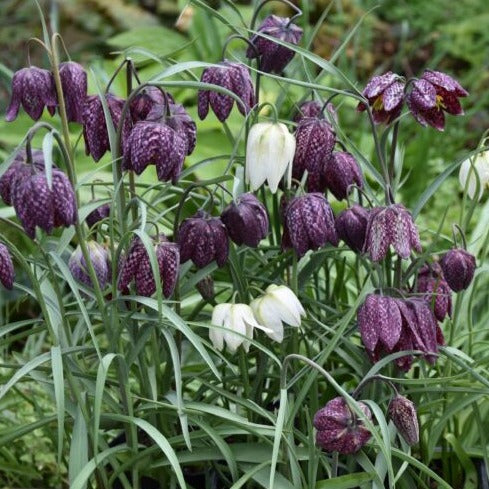
Fritillaria meleagris (Snake's Head Fritillary) Bulbs

Regular price £8.49
/
Bulbs
Tax included. Shipping calculated at checkout.
  • In stock, ready to order
  • Backordered, shipping soon
UK mainland shipping from £5.99
  • We aim to deliver this product within 3- 5 days

Fritillaria meleagris (Snake's Head Fritillary) Bulbs

The Fritillaria meleagris also known as a Snake's Head Fritillaria, is a stunning plant with deep purple nodding flowers on thin, grass-like stems. This fritillaria stays quite small, only reaching 30cm when fully grown. This plant does best when planted towards the end of the year from September to December, the plant will then bloom throughout spring. The Snake's Head Fritillary is also the recipient of the Award of Garden Merit from the Royal Horticultural Society.

The Fritillaria meleagris is quite easy to grow and does well in borders and raised beds. The bulbs should be planted in full sun to partial shade around 20cm deep.

Planting Time: September - December

Flowering Time: April - May

Max Height: 30cm

Frequently Asked Questions

When is the best time for autumn planting of spring bulbs?

The ideal time to plant spring flowering bulbs like tulips, daffodils, crocus, and snowdrops is from September to November. Planting during this period allows bulbs to establish roots before winter and ensures a healthy, vibrant bloom in early spring, with stunning green foliage and flower colours ranging from purple and blue to bright yellows and whites.

How long do spring bulbs take to flower?

Most spring bulbs planted in autumn start to flower between February and May, depending on the type. Early bloomers like snowdrops and crocus appear first, while tulips and daffodils follow later in spring, creating a sequential display of colour.

Can I plant different types of spring bulbs together?

Yes! Mixing different bulbs such as tulips, daffodils, and muscari adds something extra in terms of colour and texture to your garden. Planting in clusters or drifts creates a natural, layered effect, letting you get a longer flowering season and a richer display for both you and pollinators.

Do I need to remove foliage after flowering?

Yes, but allow leaves to die back naturally rather than cutting them too early. Leaving the foliage lets the plant save energy, which the bulbs use to produce strong, vibrant flowers come next spring.

Garden Wildlife makes every effort to ensure that the goods you ordered get to you undamaged and in a timely fashion. 

Please check the estimated delivery period for individual products on their respective website page and please feel free to contact us with any questions before ordering.

Delivery to Scotland and Off-shore locations may not be possible, could take longer, or could cost more. If there are any issues regarding the delivery address our team will email you as soon as possible. 

We will always send you as much tracking information as possible regarding your order. Our team is also available to contact at sales@gardenwildlife.com should you need us.

This site is protected by hCaptcha and the hCaptcha Privacy Policy and Terms of Service apply.

Recently viewed