Buy Hydrangea petiolaris (Climbing Hydrangea) online UK

Hydrangea petiolaris (Climbing Hydrangea)

Price
Regular price £24.99
Regular price Sale price £24.99
Save
/
Delivery from £5.99 within 3-10 working days
Pot Size
  • In stock, ready to ship
Tax included. Shipping calculated at checkout.

Hydrangea petiolaris (Climbing Hydrangea)

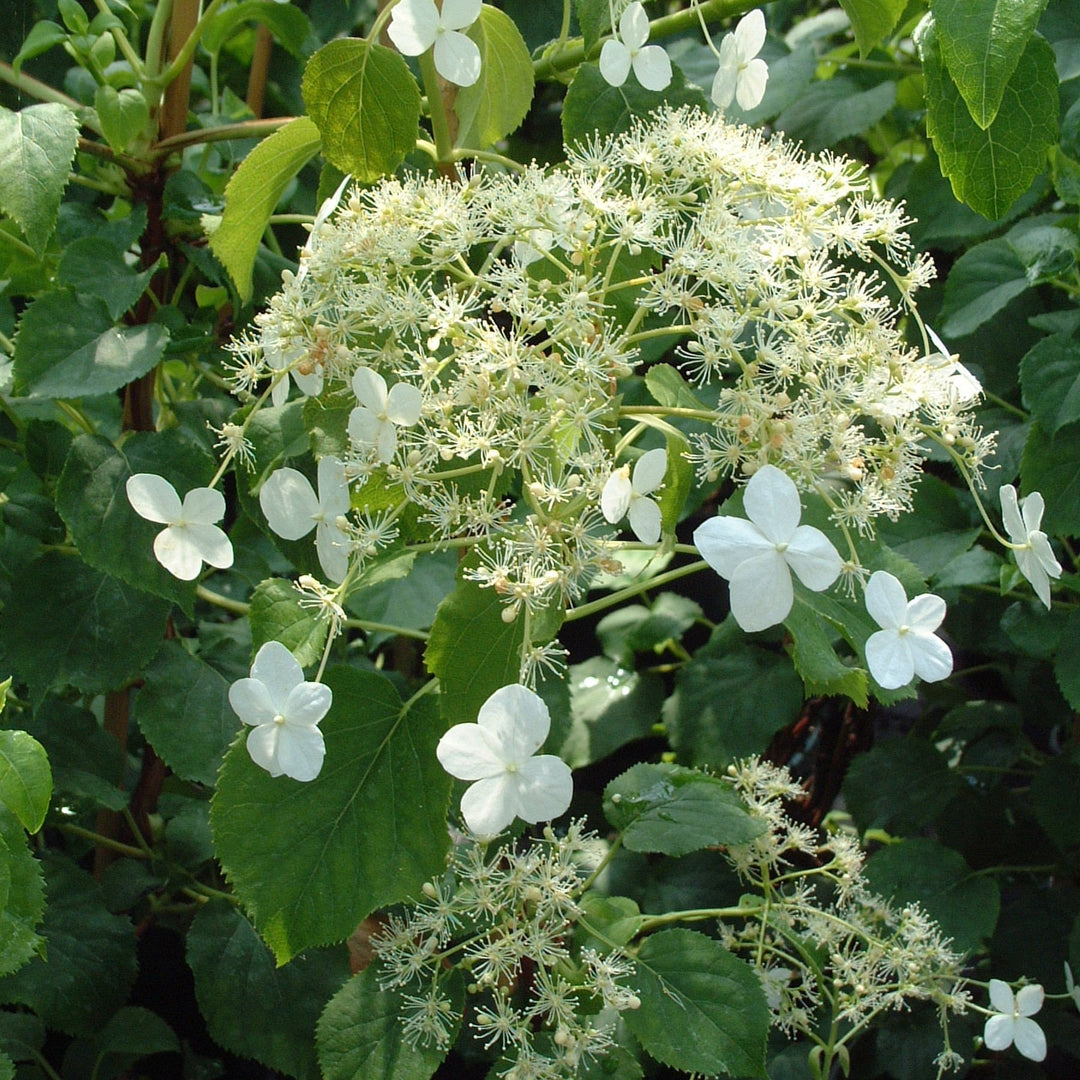
Hydrangea petiolaris is a highly desirable addition to any garden and is particularly suited for areas with limited sunlight, such as north-facing walls and fences. While it may take some time to establish itself, once it takes root, it will grow vigorously. Its deciduous nature allows for the emergence of new foliage from gnarly, twisted stems, with large plump green buds. The foliage is semi-heart shaped and a charming mid-green colour, eventually turning a striking yellow in the fall. From June to August, the plant produces a lace-like bloom, with small wispy white flowers at the centre and large, single pure white flowers surrounding them intermittently. This unique plant is self-clinging and sure to add beauty to any space.

For optimal growth, this variety should be planted in partial shade or full sun, as long as the soil is consistently moist and well-drained, and the plant is protected from strong winds. To support its natural climbing ability, consider adding a sturdy structure like a trellis or wall.

Flowering time: June - August

Max height: 15m


Frequently Asked Questions

When should I prune hydrangeas?

It depends on the type: old-wood hydrangeas get a light tidy after flowering, while new-wood types can be pruned in late winter/early spring. If in doubt, prune gently until you’ve identified the variety.

How big do hydrangeas grow?

Most varieties form medium-to-large deciduous shrubs, but size varies a lot by species and cultivar. Check the product details for mature height/spread, and allow extra room if you want that full, billowy “hydrangea shrub” look.

Are certain varieties of hydrangeas poisonous?

Hydrangeas are considered toxic if eaten, so it’s best to keep curious pets and children from nibbling leaves or flowers. Make use of netting or fleece to prevent pets from ingesting and to protect from frost.

What are good companion plants for hydrangeas?

Hydrangeas look great with shade-tolerant companions and foliage contrast like ferns, hostas, and spring bulbs, plus grasses for movement. Pair with plants that enjoy similar conditions and focus on soil management to keep colour consistent.


Reviews

You may also like
Recently viewed