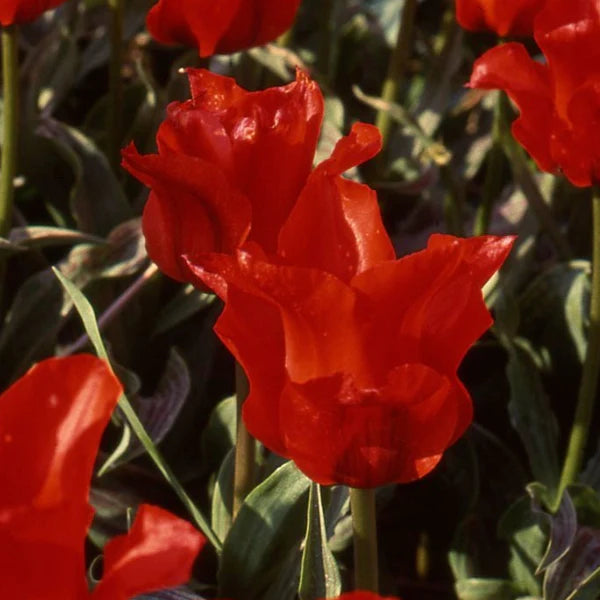
Tulipa 'Red Riding Hood' Bulbs
- In stock, ready to ship
Free UK Mainland Delivery Over £99
Promotion: £10 gift card when you spend £150
The Tulip 'Red Riding Hood' bulbs produce fine, beautifully formed carmine red oriental flowers. Its inner petals are scarlet with a black base, atop mottled bluish-maroon foliage. These tulips are highly compact, growing to a height of only 20cm which makes them perfect for window boxes and pots as well as beds, borders and rockeries.
The Red Riding Hood Tulip has been awarded the Award of Garden Merit (AGM) by the Royal Horticultural Society (RHS).
The Red Riding Hood flowers are a Division 14 tulip, characterised by their brightly-coloured blooms with mottled or striped foliage.
The Red Riding Hood Tulip flowers in April and will grow well in a wide variety of conditions, but will prefer fertile, well drained soil in a sunny or partially shaded location.
Planting Time: September - November
Flowering Time: April
Max height: 20cm
The ideal time to plant spring flowering bulbs like tulips, daffodils, crocus, and snowdrops is from September to November. Planting during this period allows bulbs to establish roots before winter and ensures a healthy, vibrant bloom in early spring, with stunning green foliage and flower colours ranging from purple and blue to bright yellows and whites.
Most spring bulbs planted in autumn start to flower between February and May, depending on the type. Early bloomers like snowdrops and crocus appear first, while tulips and daffodils follow later in spring, creating a sequential display of colour.
Yes! Mixing different bulbs such as tulips, daffodils, and muscari adds something extra in terms of colour and texture to your garden. Planting in clusters or drifts creates a natural, layered effect, letting you get a longer flowering season and a richer display for both you and pollinators.
Yes, but allow leaves to die back naturally rather than cutting them too early. Leaving the foliage lets the plant save energy, which the bulbs use to produce strong, vibrant flowers come next spring.
Get Email Updates
Subscribe to get special offers, free giveaways, product news and updates from the GW team.