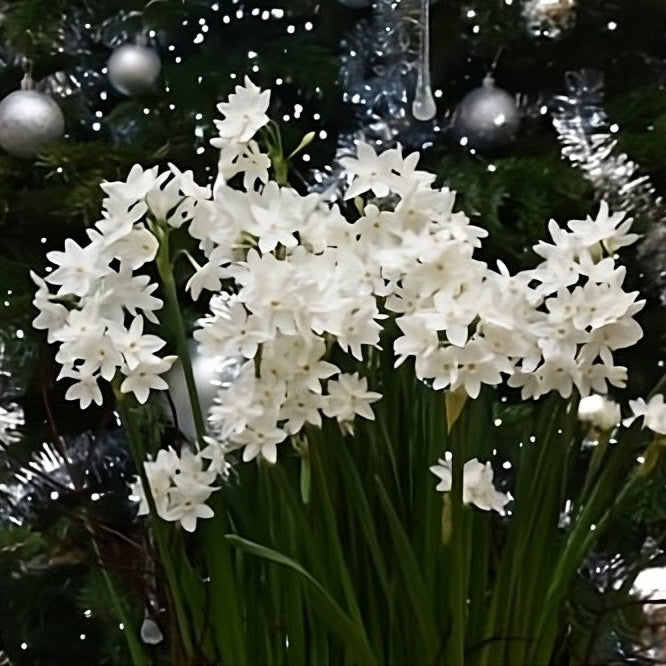
Leucojum autumnale 'September Snow', now botanically known as Acis autumnalis 'September Snow', is a charming miniature autumn snowflake producing masses of delicate, nodding white flowers in September and October. The small bell-like blooms are held on slender stems and may show a subtle pinkish flush around the base, giving them an especially refined appearance.
Growing to only around 10cm tall, 'September Snow' is perfect for rock gardens, alpine troughs, raised beds and other sunny, well-drained positions where its tiny flowers can be appreciated at close range. Once established it can increase freely, gradually producing a larger colony and an increasingly impressive autumn display.
-
Botanical name: Acis autumnalis 'September Snow'
-
Synonym: Leucojum autumnale 'September Snow'
-
Common name: Autumn Snowflake
-
Plant type: Bulbous perennial
-
Flower colour: Pure white, sometimes pinkish at the base
-
Flowering time: September-October
-
Height: Approximately 10cm
-
Spread: Approximately 5-10cm
-
Position: Full sun or light partial shade
-
Soil: Well-drained soil
-
Ideal for: Rock gardens, alpine troughs, raised beds and scree gardens
About Leucojum autumnale 'September Snow'
This delightful little bulb was traditionally classified as Leucojum autumnale but is now generally placed in the genus Acis as Acis autumnalis. The familiar common name, Autumn Snowflake, reflects the delicate white flowers and its unusual flowering season.
'September Snow' is a selected white-flowered form. Slender stems emerge towards the end of summer and carry small, hanging, conical flowers that seem to float above the ground. Their simplicity is part of their appeal, particularly when several bulbs have established into a colony.
Autumn Flowers
While many small bulbs flower during spring, 'September Snow' provides its display during September and October. This makes it particularly useful for extending seasonal interest in rock gardens and alpine plantings after many summer plants have finished flowering.
The flowers appear on stems only around 10cm tall, so plant them somewhere they will not be hidden by vigorous neighbouring plants.
Where to Plant September Snow
Choose a position in full sun with excellent drainage. Light partial shade is also suitable, but an open, bright site generally encourages good growth and flowering.
Rock gardens, raised beds, scree gardens and alpine troughs provide ideal conditions because excess water can drain away easily. The compact habit also makes this bulb an excellent choice for smaller gardens and container collections.
How to Plant the Bulbs
Plant the bulbs in well-drained soil during their dormant period. A planting depth of approximately 5-8cm is suitable, with bulbs spaced around 5-10cm apart.
On heavier soils, incorporate horticultural grit into the planting area to improve drainage. Once established, the bulbs are best left undisturbed and allowed to increase naturally.
Height and Spread
Leucojum autumnale 'September Snow' is a genuinely miniature bulb, reaching only about 10cm tall with an individual spread of approximately 5-10cm. Over time, however, established bulbs can multiply and produce a much wider colony.
Naturalising and Propagation
'September Snow' can increase freely in suitable conditions, both by producing additional bulbs and by seed. This makes it especially rewarding in gravel gardens and raised beds where seedlings can be allowed to develop naturally.
Once a colony becomes established, numerous slender flower stems may appear together each autumn, creating a delicate scattering of white blooms.
Why Grow Leucojum 'September Snow'?
- Delicate pure white autumn flowers
- Unusual September-October flowering period
- Compact height of around 10cm
- Spread of approximately 5-10cm
- Excellent for alpine troughs and rock gardens
- Ideal for sunny, well-drained sites
- Can increase freely once established
- Perfect for extending bulb interest into autumn
Frequently Asked Questions
When does Leucojum 'September Snow' flower?
It flowers in autumn, usually during September and October.
How tall does 'September Snow' grow?
It is a miniature bulb reaching approximately 10cm tall.
What is its spread?
Individual plants have a spread of roughly 5-10cm, although established colonies can become considerably wider as the bulbs multiply.
Is Leucojum autumnale the same as Acis autumnalis?
Yes. The species was formerly classified as Leucojum autumnale and is now generally known botanically as Acis autumnalis.
Where should I plant 'September Snow'?
A sunny, well-drained position is ideal. Rock gardens, scree beds, raised beds and alpine troughs are particularly suitable.
Will 'September Snow' spread?
Yes. In suitable conditions it can increase freely and may also produce seedlings, gradually developing into an attractive colony.
With its tiny pure white flowers, unusual autumn flowering season and ability to form charming colonies, Leucojum autumnale 'September Snow' is a delightful bulb for rock gardens, troughs and other well-drained positions.