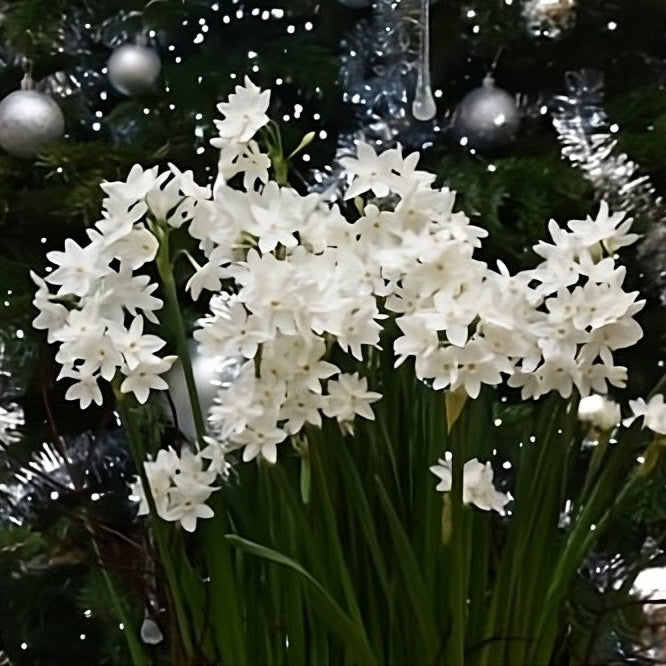
Anemone nemorosa 'Vestal' is an exquisite double-flowered wood anemone, producing pure white blooms with distinctive, densely packed button-like centres. Awarded the RHS Award of Garden Merit (AGM), this beautiful cultivar combines the natural woodland charm of our native wood anemone with a much fuller and more unusual flower.
Flowering from March to April, 'Vestal' typically grows to around 10-15cm tall, although established plants can occasionally reach closer to 20cm. Its low-growing habit makes it ideal beneath deciduous trees and shrubs, along woodland edges, in shady borders and anywhere a natural carpet of spring flowers is desired.
-
Botanical name: Anemone nemorosa 'Vestal'
-
Common name: Double Wood Anemone
-
Award: RHS Award of Garden Merit (AGM)
-
Flower colour: Pure white
-
Flower type: Double, with a button-like centre
-
Flowering time: March-April
-
Height: Approximately 10-15cm
-
Position: Partial or dappled shade
-
Soil: Humus-rich, moist but well-drained soil
-
Habit: Low-growing, spreading rhizomatous perennial
-
Suitable for: Woodland gardens, shady borders and naturalising
About Anemone nemorosa 'Vestal'
'Vestal' is a particularly distinctive cultivar of Anemone nemorosa, the familiar wood anemone found carpeting ancient woodland in Britain and elsewhere in Europe. Rather than the simple ring of petals surrounding prominent yellow stamens seen in the species, 'Vestal' produces six or seven broad white outer petals surrounding a dense centre of narrow white petaloid staminodes.
The result is an unusual two-tiered appearance, almost like a small white pompom sitting in the centre of each flower. Against the deeply divided fresh green foliage, the brilliant white flowers create an exceptionally attractive spring display.
An RHS Award of Garden Merit Wood Anemone
Anemone nemorosa 'Vestal' has received the Royal Horticultural Society's Award of Garden Merit, recognising its value as a reliable and worthwhile garden plant when grown in appropriate conditions.
It is particularly effective when allowed to establish into informal colonies. Although each individual plant is small, a mature patch carrying numerous double white flowers can become a striking feature of a spring woodland garden.
Perfect for Woodland and Shade
'Vestal' is happiest in partial or dappled shade. Planting beneath deciduous trees and shrubs provides particularly suitable conditions, as plenty of light reaches the plants during early spring before the overhead canopy develops.
As surrounding trees come into leaf, the increasing shade coincides with the wood anemone completing its annual growth cycle. The foliage eventually dies back and the plant spends the remainder of the year dormant underground.
Soil and Growing Conditions
For best results, choose a humus-rich, moisture-retentive but well-drained soil. Conditions similar to a natural woodland floor are ideal. Incorporating leaf mould, garden compost or other well-rotted organic matter can be particularly beneficial on poorer soils.
Although the plants appreciate moisture while actively growing, avoid sites that remain permanently waterlogged. Once established, the underground rhizomes are capable of gradually spreading through suitable soil.
How to Plant Anemone nemorosa 'Vestal'
Wood anemones grow from slender creeping rhizomes rather than the knobbly corms associated with species such as Anemone blanda. Plant the rhizomes horizontally approximately 3-5cm deep, covering them gently with soil.
For naturalising, space them around 10-15cm apart in informal groups. They may initially appear quite widely spaced, but established plants gradually spread through their underground rhizomes to create increasingly substantial colonies.
Water after planting if the soil is dry and try to prevent newly planted rhizomes from drying out completely while they establish.
Naturalising Anemone 'Vestal'
One of the great attractions of wood anemones is their ability to form beautiful spring carpets. 'Vestal' will gradually spread when planted in suitable conditions, although patience is worthwhile as colonies develop over several growing seasons rather than appearing immediately.
For the most natural effect, plant small groups at irregular intervals beneath trees, around shrubs or through an informal woodland border. As the rhizomes spread, these separate groups can gradually develop into larger patches.
Companion Planting
The pure white flowers work beautifully alongside other spring woodland plants. Snowdrops, primroses, hellebores, erythroniums and other forms of Anemone nemorosa all make suitable companions.
Combining cultivars with different flower forms can be particularly effective. The intricate double centres of 'Vestal', for example, provide an attractive contrast alongside simpler single-flowered wood anemones.
After Flowering
Allow the foliage to die back naturally after flowering. During this period the leaves continue to replenish the underground rhizomes, helping to support the following year's growth and flowers.
The foliage will eventually disappear completely as the plant enters summer dormancy. This is entirely normal and does not mean the plant has died. Avoid disturbing the dormant rhizomes unnecessarily and fresh shoots should return the following spring.
Why Grow Anemone nemorosa 'Vestal'?
- Superb pure white double flowers
- Distinctive button-like centres
- RHS Award of Garden Merit
- Flowers in March and April
- Compact growth of approximately 10-15cm
- Ideal for partial and dappled shade
- Excellent beneath deciduous trees and shrubs
- Spreads gradually to form attractive colonies
- Perfect for woodland and naturalistic planting
- An unusual alternative to single wood anemones
Frequently Asked Questions
Is Anemone nemorosa 'Vestal' a double wood anemone?
Yes. 'Vestal' has broad white outer petals surrounding a dense, button-like centre formed from numerous narrow white staminodes, giving the flower its distinctive double appearance.
When does Anemone 'Vestal' flower?
It generally flowers during March and April, providing colour early in the spring garden.
How tall does Anemone nemorosa 'Vestal' grow?
Plants typically reach around 10-15cm tall, although established specimens may occasionally grow somewhat taller.
Will Anemone 'Vestal' spread?
Yes. Like other wood anemones, it grows from creeping rhizomes and will gradually spread to form colonies where conditions are suitable.
Can I grow Anemone 'Vestal' beneath trees?
Yes. Beneath deciduous trees and shrubs is one of the best positions, providing good spring light followed by dappled shade later in the season.
Does Anemone nemorosa 'Vestal' have an RHS AGM?
Yes. 'Vestal' has been awarded the Royal Horticultural Society's Award of Garden Merit (AGM).
With its pure white double blooms, unusual button-like centres and ability to naturalise in shady areas, Anemone nemorosa 'Vestal' is an outstanding woodland perennial. It is particularly effective planted in groups, where it can gradually develop into an elegant carpet of intricate white flowers each spring.